Stargazing in Maunabo — Puerto Rico's Darkest, Dreamiest Night Skies
There's a specific moment almost every Casa Chunan guest describes the same way: they step outside after dinner, look up out of habit, and stop walking. No glow. No haze. Just stars — a lot more of them than they remember stars being.
That reaction makes sense once you know the setup. Most people picture Puerto Rico as beaches and rainforest, which it absolutely is. Almost nobody pictures it as a stargazing destination. But Maunabo's rural, low-light southeast coast is exactly the kind of place astrotourists drive hours out of their way to find — we just happen to already live here.
This guide covers why Maunabo's skies are different, when to plan your trip, where to actually stand, and what you'll see once you do.
Why Maunabo's Skies Are Different
Light pollution is the single biggest reason most people never see a proper night sky. San Juan, Condado, and the whole north coast metro corridor sit under a permanent orange dome of streetlights, resorts, and traffic — the kind of ambient glow that erases everything but the brightest stars and the moon.
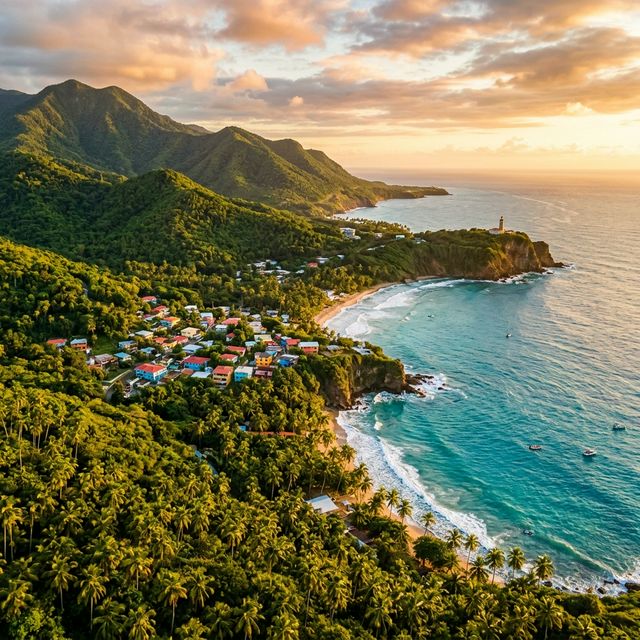
Maunabo sits on the opposite end of that scale. It's a small, rural municipality on the southeast coast with no large-scale commercial development, no stadium lighting, no dense urban grid. Streetlights thin out fast once you're outside the town center, and the nearest major light source — San Juan's glow — sits far enough away that it doesn't wash out the sky the way it would twenty minutes from the metro area.
The result: a genuinely dark sky, within a 90-minute drive of the airport, that most visitors never think to look for.
Best Nights to Look Up
| Factor | Best conditions |
|---|---|
| Season | December through April (dry season, fewer clouds) |
| Moon phase | New moon or within a few days of it |
| Time of night | 9 PM to midnight, after the last daylight haze clears |
| Sky condition | Clear, low humidity, little to no cloud cover |
Puerto Rico's dry season runs roughly December through April, which lines up with lower humidity and fewer cloudy nights than the summer wet season. Cross-reference that with a new moon calendar before you book — even a half moon is bright enough to wash out the fainter parts of the Milky Way, so timing your trip around the darkest lunar phase makes a real difference.
Where to Stargaze Around Casa Chunan
The deck. This is the easiest option and, honestly, the one most guests use. Step outside, let your eyes adjust for ten minutes, and the sky opens up right from the villa. No driving required.
Punta Tuna Lighthouse. A short drive from Casa Chunan, this coastal point sits away from any development, with an open horizon over the water. It's one of the darkest, widest-open spots on this stretch of coast — bring a blanket and get there before your eyes need to adjust.
A quiet beach after sunset. Any of Maunabo's less-trafficked beaches works well once the day-trippers clear out. The open sky over the ocean, with no tree canopy blocking your view, makes for one of the widest fields of stars you'll find on this coast.
What You'll Actually See
On a clear, moonless night from Maunabo, expect:
- The Milky Way's band — faint but visible to the naked eye once your eyes fully adjust, running across the sky like a pale streak of haze that resolves into structure the longer you look.
- Hundreds more visible stars than you'd see from any US city — the difference is immediate and obvious, even to people who've never paid attention to the sky before.
- Shooting stars — a few on almost any clear night, and considerably more during meteor shower peaks like the Perseids (August) or Geminids (December).
- Venus and Jupiter — frequently the two brightest points in the sky, easy to spot even before full darkness sets in.
A Simple Phone Astrophotography Tip
Most modern phones have a night mode that can capture a surprisingly good shot of the Milky Way with almost no gear. Prop the phone against something stable (a railing, a rock, a small tripod if you have one), switch to night mode, and hold still for the full exposure. Turn off the flash and dim your screen brightness beforehand so you don't blow out your night vision before you shoot.
Pair It With Your Trip
Stargazing works best as the last stop on a full Maunabo day, not a standalone activity. Spend the day exploring the southeast coast, catch sunset at the beach or the lighthouse, have dinner, and let the sky be dessert. If you're planning a full itinerary, our guides to day trips from Maunabo and the Punta Tuna Lighthouse pair naturally with an evening under the stars.
Guests planning a proposal, anniversary, or just a quiet night away from screens tend to remember the sky more than almost anything else about the trip. It costs nothing, it needs no reservation, and it's available every clear night we're not looking at our phones.
Under These Skies
Casa Chunan's deck looks straight out over Maunabo's dark coastline — no city glow, no light pollution, just the sky.
Check Availability at Casa ChunanFAQ: Stargazing in Maunabo, Puerto Rico
Yes, from rural low-light areas like Maunabo. On a clear, moonless night, the Milky Way's band is visible to the naked eye away from San Juan's glow.
December through April, the dry season, gives the clearest skies with the fewest cloudy nights. Pair it with a new moon for the darkest possible sky.
Yes. Maunabo has minimal light pollution — no large-scale development, little street lighting outside town, and enough distance from San Juan's glow to keep the sky noticeably dark.
No. Naked-eye viewing works well. A phone with night mode can capture a decent photo, and a star-map app helps identify what you're looking at.
The Milky Way's band, hundreds more visible stars than in a city, regular shooting stars, and often Venus or Jupiter as the brightest points overhead.